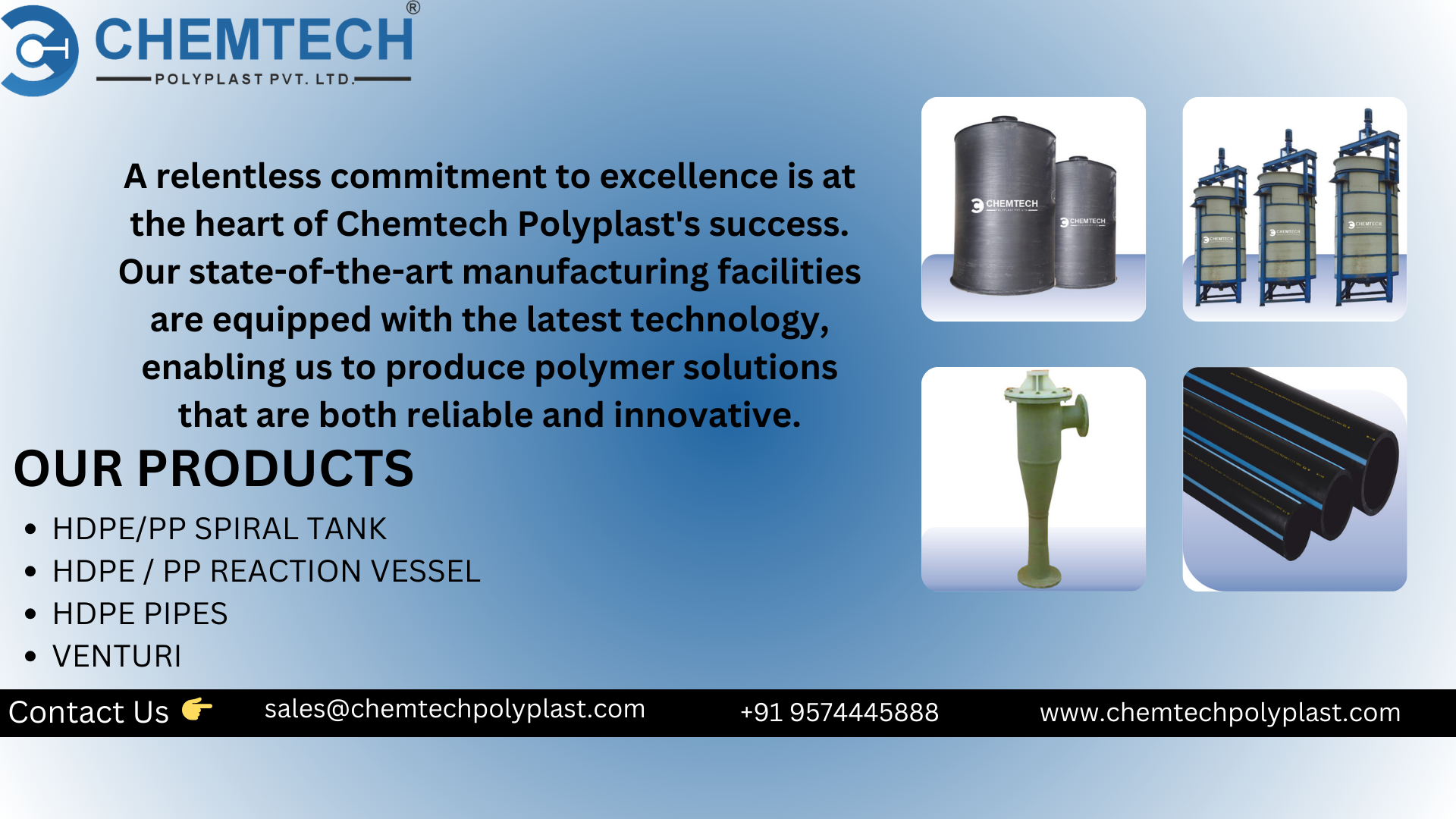
Agricultural HDPE Pipe Manufacturer in Ahmedabad
Introduction — Top Supplier of Agricultural HDPE Pipes in India
Chemtech Polyplast is a leading Agricultural HDPE Pipe Manufacturer in Ahmedabad, specializing in producing high-density polyethylene pipes built for the rigors of farming and irrigation in India. Our pipes are manufactured to meet stringent quality standards, offering superior resistance to corrosion, chemicals, and UV radiation. Designed for efficient water transfer, our HDPE pipes support various agricultural applications, ensuring long-term durability and reliable performance for farmers nationwide.
Advantages of Using HDPE Pipes in Farming and Irrigation
Agricultural HDPE pipes from Chemtech Polyplast offer significant benefits over conventional piping materials. Their high flexibility allows for easier installation around terrain obstacles, minimizing the need for numerous fittings. The smooth inner surface reduces friction losses, leading to better flow rates and energy savings in pumping. Furthermore, HDPE is non-toxic and leakage-free when fusion welded, making it the ideal choice for transporting potable water and critical irrigation resources to crops.
Types of Agricultural HDPE Pipes
- HDPE Drip Irrigation Pipes.
- HDPE Sprinkler System Pipes.
- HDPE Submersible Pump Delivery Pipes.
- HDPE Water Distribution Mains.
- HDPE Pipes for Farm Ponds & Reservoirs.
Standards & Grade Offered
- IS 4984 compliant HDPE pipes.
- PE 63, PE 80, and high-performance PE 100 grades.
- Pressure ratings: PN 2.5 to PN 16.
- UV stabilized material for outdoor use.
- Available in coil/straight lengths and various diameters.
Key Applications for Agricultural HDPE Piping
- Main and sub-main lines for drip and micro-irrigation systems.
- Water distribution network in vast agricultural fields and greenhouses.
- Rising main and delivery lines for submersible and borewell pumps.
- Transporting raw water from rivers, canals, or lakes to farms.
- Effluent discharge and waste water management on agricultural lands.
Core Features — Agricultural HDPE Pipes (Chemtech Polyplast)
- Excellent resistance to UV exposure, chemicals, and fertilizers.
- High impact strength and resistance to rough handling/terrain.
- Flexibility and long lengths reduce joints, minimizing leakage risk.
- Corrosion-proof, ensuring a long operational life underground.
- Lightweight nature simplifies transportation and field installation.
Why Choose Chemtech Polyplast in Ahmedabad for HDPE Pipes?
Chemtech Polyplast is recognized as a trusted Agricultural HDPE Pipe Manufacturer in Ahmedabad, committed to quality and service. Our manufacturing process utilizes virgin grade material and advanced extrusion technology to produce pipes that are reliable, long-lasting, and conform to national standards. We understand the critical role of efficient water management in agriculture and deliver robust piping solutions tailored to maximize yield and minimize maintenance for our clients across India.
Installation & Handling Tips — HDPE Pipes
- Ensure proper trenching and bedding to support the pipe.
- Use fusion welding (butt or electro-fusion) for strong, leak-proof joints.
- Avoid sharp bends below the minimum bending radius of the pipe.
- Protect exposed pipes from prolonged direct mechanical damage.
- Verify pressure rating matches the system requirements before installation.
FAQs — Agricultural HDPE Pipes (Chemtech Polyplast)
1. Are your agricultural HDPE pipes suitable for underground installation?
+
Yes, our HDPE pipes are highly durable, corrosion-proof, and designed for direct burial, making them perfectly suited for permanent underground agricultural water supply lines.
2. What pressure ratings are available for your irrigation HDPE pipes?
+
We manufacture pipes with various pressure ratings from PN 2.5 to PN 16, ensuring we have the right pipe for low-pressure distribution systems as well as high-pressure pump applications.
3. Can these pipes be used for drip and sprinkler irrigation systems?
+
Absolutely. HDPE pipes are the standard choice for main and sub-main lines in both drip and sprinkler irrigation systems due to their flexibility, joint integrity, and chemical resistance.
4. How are the joints made in Agricultural HDPE piping?
+
Joints are typically made using heat fusion techniques, such as butt fusion or electro-fusion, which create a homogeneous, leak-free joint that is as strong as the pipe itself.
5. Do you supply pipes in different lengths and diameters?
+
Yes, we supply a wide range of diameters and pressure classes. Pipes are available in both long coils for easy field installation and straight lengths based on project needs.