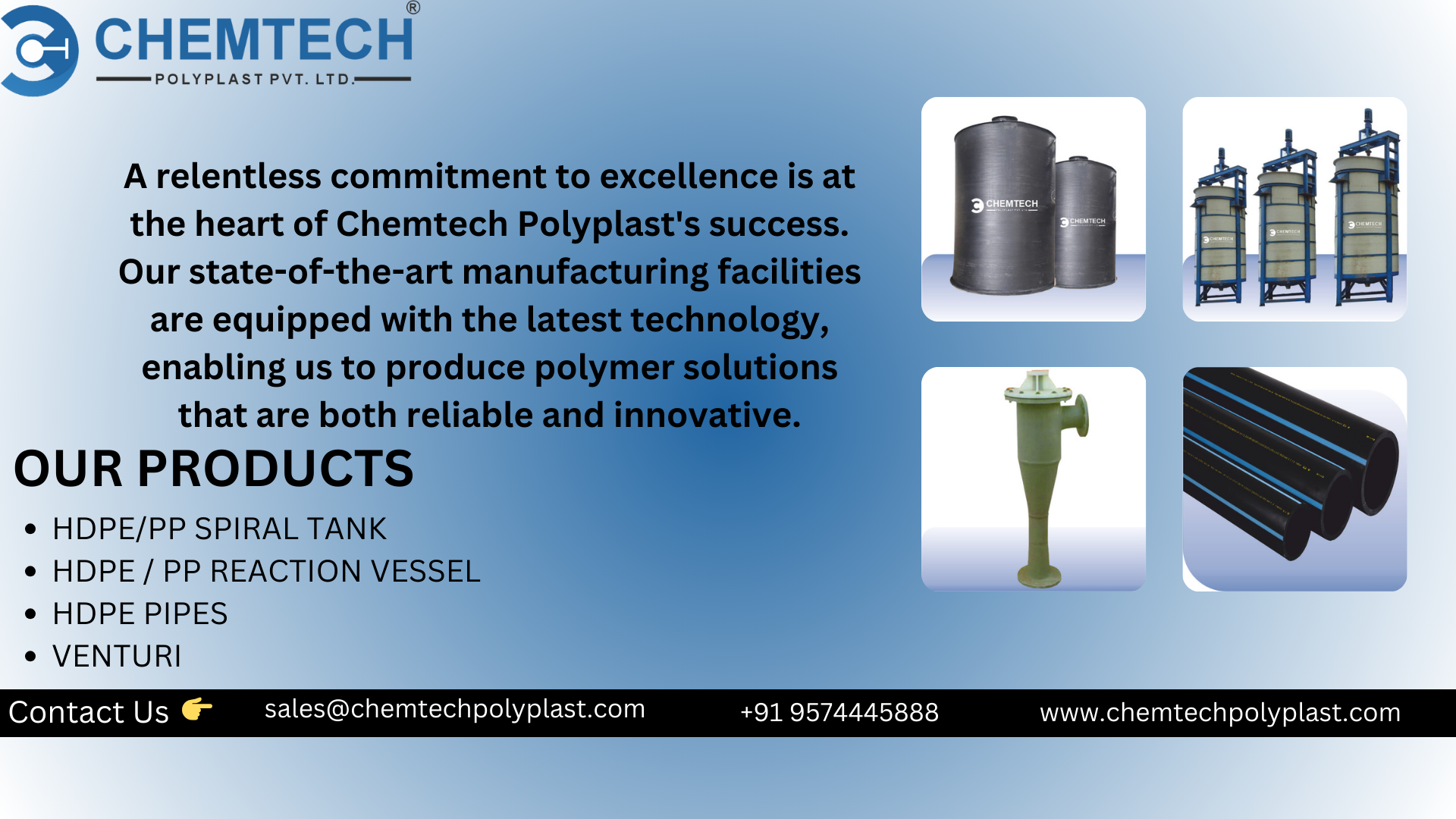
Trusted Supplier of HDPE Pipes for Chemical Transportation in India
Chemtech Polyplast specializes in manufacturing high-performance HDPE Pipes for Chemical Transportation across diverse industries in India. The safe and reliable conveyance of corrosive fluids, industrial effluents, and hazardous waste requires a robust piping solution. Our High-Density Polyethylene (HDPE) pipes are engineered with superior chemical resistance and feature leak-proof, heat-fused joints, making them the preferred choice over traditional metal or concrete pipes for critical industrial applications.
Why Choose HDPE for Industrial Chemical Lines in India?
Traditional piping materials are susceptible to corrosion, scaling, and chemical degradation, which can lead to frequent failures and environmental hazards. Our HDPE pipes offer unmatched resistance to a wide range of acids, alkalis, and industrial solvents. Manufactured using virgin PE 100 grade material, they maintain their structural integrity and smooth inner bore, ensuring minimal friction loss and zero contamination over a long service life.
HDPE Applications in Chemical and Industrial Sector
- Transportation of concentrated acids, alkalis, and salts.
- Effluent Treatment Plant (ETP) and Sewage Treatment Plant (STP) piping.
- Conveyance of aggressive industrial waste and slurries.
- Chemical process lines and transfer piping within manufacturing units.
- Underground drainage and sewage systems requiring chemical immunity.
Technical Advantages for Chemical Transportation
- Exceptional chemical and corrosion resistance (chemically inert).
- Heat-fused joints ensure a zero-leak monolithic piping system.
- High abrasion resistance, ideal for carrying abrasive slurries.
- Superior flexibility and impact strength to handle ground movement.
- Resistant to microbial and biological buildup (bio-fouling).
Features of Chemtech Chemical-Grade HDPE Pipes
- Manufactured with high-strength PE 100 and PE 80 grade material.
- Designed for high pressure applications (PN ratings up to PN 16 and above).
- Available in a wide range of diameters from 20 mm to 630 mm.
- Compliant with Indian Standards for quality and safety.
- Smooth internal surface prevents scaling and clogging from chemical residues.
Sectors Utilizing Our HDPE Chemical Pipes
- Chemical Processing and Petrochemical Plants.
- Pharmaceutical and Dye Manufacturing Industries.
- Power Generation and Desalination Plants (Brine/Effluent).
- Mining Operations (Slurry and Tailings Disposal).
- Textile and Pulp & Paper Mills (Effluent lines).
The Chemtech Polyplast Commitment to Safety and Durability
As a leading manufacturer of HDPE Pipes for Chemical Transportation in India, Chemtech Polyplast is dedicated to providing piping solutions that ensure both operational efficiency and environmental safety. Our rigorous quality control processes guarantee that every pipe can reliably handle the aggressive nature of industrial chemicals. We offer technical consultation to select the optimal pipe grade and pressure rating for your specific chemical transfer requirements, ensuring a long-term, maintenance-free system.
Guidelines for Installing Chemical Transport HDPE Pipes
- Always use certified butt-fusion or electro-fusion equipment for jointing to ensure a perfect, leak-proof weld.
- Verify the chemical compatibility chart for the fluid being transported with PE 100 material.
- Implement proper trenching and bedding procedures for underground installations to avoid point loading.
- Ensure the pipe is rated for the maximum temperature and pressure of the chemical process stream.
- Conduct a hydraulic pressure test before commissioning the chemical transport line.
FAQs — HDPE Piping for Chemical Industries
1. Can HDPE pipes handle highly corrosive chemicals like strong acids?
+
Yes, HDPE pipes, especially those made from PE 100 grade, are inherently resistant to most strong acids, alkalis, and many organic solvents. Their non-reactive nature makes them far superior to metal pipes for corrosive applications.
2. How are the joints secured to prevent chemical leaks?
+
HDPE pipes use heat fusion techniques (butt fusion or electro-fusion) to create permanent, monolithic joints. This welding process eliminates the need for gaskets or mechanical seals, ensuring the entire pipeline is 100% leak-proof, which is critical for chemical safety.
3. What is the typical lifespan of HDPE pipes in chemical service?
+
Due to their resistance to corrosion and chemical attack, HDPE pipes in chemical transportation applications often have a designed service life exceeding 50 years, significantly reducing replacement frequency and long-term costs.
4. Are these pipes suitable for both pressure and non-pressure effluent lines?
+
Yes, our HDPE pipes are available in various pressure ratings (PN classes) to suit both high-pressure chemical transfer lines and non-pressure applications like industrial gravity drainage or effluent collection systems.
5. Do you supply HDPE pipes across all major industrial hubs in India?
+
Chemtech Polyplast is a national supplier. While based in Ahmedabad, we have the capability and network to supply high-quality HDPE chemical transportation pipes to industrial zones and projects across India.